If you are dreaming about room for horses, a private barn, or simply more land to enjoy, buying acreage near Canton can feel exciting and a little overwhelming at the same time. A beautiful tract may look perfect at first glance, but the real test is whether it supports the way you want to live and use the property. When you understand zoning, access, utilities, and site conditions before you buy, you can move forward with more confidence. Let’s dive in.
Start With Jurisdiction and Zoning
One of the first things to confirm is whether the property is inside Canton city limits or in unincorporated Cherokee County. That matters because the City of Canton and Cherokee County handle zoning and permitting through different departments. A parcel that looks rural may still fall under different rules depending on where it sits.
For many acreage and equestrian buyers, zoning is the starting point for everything else. Cherokee County’s AG district is intended to preserve agricultural activity, discourage suburban subdivision, and encourage agriculture and livestock production. If your goal is to keep horses, build a barn, or create a hobby-farm setup, that zoning context matters right away.
Cherokee County also notes that AG properties do not have a cap on livestock as long as animals are kept in safe and humane conditions. In residential zoning, livestock requires at least 2 acres and is limited to one animal per acre. The county also states that limited agricultural uses such as crop production and animal husbandry may be compatible with some estate-residential and low-density residential districts on tracts of five acres or more.
That means you should never assume acreage automatically equals horse property. A tract may have enough land to feel rural, but your intended use still needs to match the zoning district and applicable standards.
Confirm What the Land Legally Allows
Before you get attached to a parcel, verify the zoning through Cherokee County’s GIS and review the district standards table. The county specifically points buyers to its online GIS map for zoning information on unincorporated parcels. It also notes that key district details are found in Table 7.1 and Table 7.2 of the zoning ordinance.
A current plat or survey is just as important. If there is no plat on file, the county says you may need a surveyor. This step can help you confirm setbacks, easements, buffers, and other land constraints before they turn into expensive surprises.
For buyers focused on horses or barns, this legal review is not paperwork for paperwork’s sake. It is how you confirm whether the property can support your plans from day one.
Look Closely at Access and Driveways
On acreage, access is more than a convenience. It affects how well the property works for horse trailers, feed deliveries, hay trucks, farm equipment, and emergency vehicles. A long driveway may look charming, but it still needs to function well in real life.
Cherokee County requires an approved driveway permit in the residential permit process. Its zoning materials also note that driveway and curb-cut approvals may involve the county engineer and, for state highways, GDOT approval. In other words, your entrance is part of the property’s overall land-use picture.
When you walk a property, pay attention to how you would actually enter and use it. Ask yourself whether the driveway location, width, slope, and turning space make sense for the equipment and vehicles your lifestyle may require.
Evaluate Septic, Water, and Utilities Early
A larger parcel does not always mean easy building. Cherokee County says whether a lot is buildable depends on utilities, soil types, access, easements, topography, setbacks, buffers, and zoning. Those details can shape where a home, barn, or riding area can realistically go.
Septic is a major part of that conversation. The county requires septic approval from Environmental Health before a residential permit is issued when septic applies. Since some parts of Cherokee County still rely on well water and centralized sewer covers only a small portion of the county, buyers should verify both water source and septic feasibility early.
This is one of the most important differences between buying acreage and buying in a subdivision. On a lifestyle property, utility questions can directly affect cost, building plans, and long-term use.
Review Drainage, Creeks, and Floodplain Risk
Many buyers are drawn to acreage because of natural features like ponds, creeks, and low rolling ground. Those features can add beauty, but they can also bring maintenance obligations and building limitations. That is why drainage and floodplain review should be part of your early due diligence.
Cherokee County states that private drainage features such as ponds, pipes, ditches, and creeks are the owner’s responsibility, not the county’s. The county also says it does not maintain drainage easements outside the right of way and that owners should not alter drainage improvements without prior written approval.
Floodplain review matters too, especially on tracts with waterways or low-lying areas. Cherokee County’s Floodplain Management Division can identify whether a parcel is in the Special Flood Hazard Area, the future-conditions SFHA, or a floodway. The county also notes that flood insurance is mandatory for buildings in the floodplain.
In practical terms, a scenic water feature should be evaluated as both an amenity and a responsibility. That balance is worth understanding before you buy.
Check Barns and Outbuildings Carefully
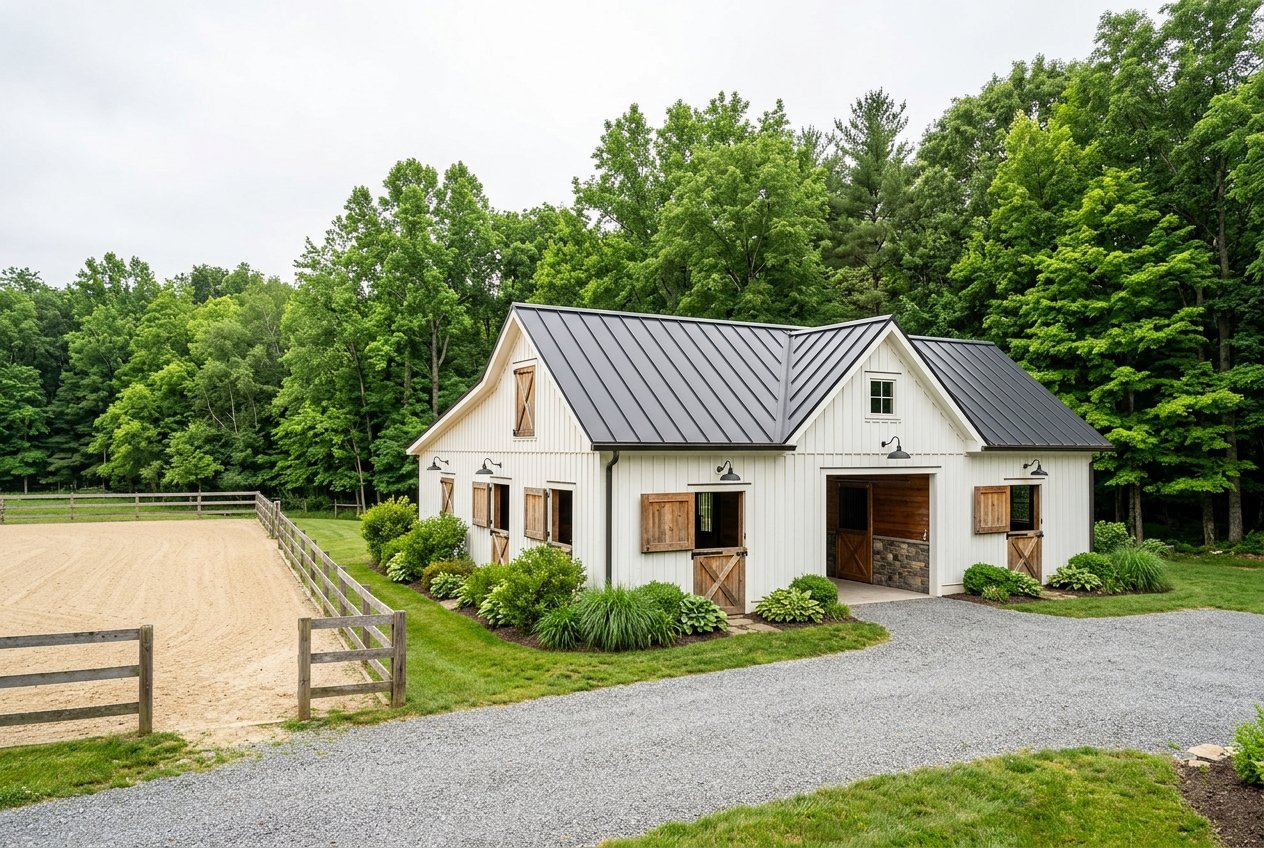
A barn can be one of the biggest reasons a property stands out. Still, existing structures need the same level of review as the land itself. Cherokee County says barns, farm outbuildings, and detached storage buildings require building permits, although very small sheds under 200 square feet may be exempt.
The county also defines a barn broadly enough to include animal quarters, storage of agricultural products, farm equipment, and supplies used for agricultural operations. In AG zoning, a barn may be exempt from some general accessory-structure provisions, but it still must be at least 75 feet from any property line. That setback rule can affect where new barns or run-in sheds can go.
If a property already has barns, sheds, or other structures, ask whether they were permitted and placed according to county rules. This is especially important on older acreage where buildings may have been added over time.
Think Beyond Fencing to Horse Function
Fencing is easy to underestimate when you first shop for acreage. Buyers often focus on the house, the views, or the number of acres, then discover later that fencing design, placement, and condition are major practical issues. On horse property, fencing is both a safety feature and a budget item.
Cherokee County says fences not over 7 feet high do not require a permit, but fences next to a public road right of way may be limited by setback rules. UGA Extension also notes that horse fencing should be chosen for containment, safety, and visibility because horses are prone to fence-related injuries.
That means the question is not just whether the property is fenced. It is whether the fencing supports the safe and practical use you have in mind.
Make Sure the Pasture Works
Not every open field functions well as horse pasture. Pasture layout, drainage, slope, and water access all affect day-to-day usability. A tract can have impressive acreage on paper and still fall short if the land is too wet, too steep, or poorly laid out.
Extension guidance recommends avoiding wet areas, steep slopes, wetlands, and creeks when planning horse pasture. It also recommends placing gates where water will not pool and making sure horses have free access to clean, fresh water. Those details can influence where paddocks, gates, and shelters should be placed.
UGA’s Georgia forage guidance offers a useful rule of thumb of about 2 acres of perennial pasture per mature horse on non-cropping land, though actual carrying capacity varies based on soils, forage species, fertility, moisture, and management. UGA also recommends sheltered hay storage and ideally a separate hay storage area away from the horse barn to reduce dust and fire risk.
For buyers, the takeaway is simple: count usable pasture, not just total acreage. The layout and condition of the land matter as much as the lot size.
Use Soils as a Reality Check
Soils may not be the most glamorous part of your home search, but they can have a real impact on how a property performs. Soil conditions can affect pasture quality, barn placement, and other land-use decisions. If you plan to build or improve the property, this step can be especially helpful.
The Natural Resources Conservation Service says Web Soil Survey provides soil maps and detailed descriptions for a selected area. For acreage buyers, that makes soil screening a practical due-diligence tool. It can help you better understand the land before you commit to a site plan or major improvements.
A Smart Buyer’s Canton-Area Checklist
If you are considering acreage or equestrian property near Canton, keep these questions front and center:
- Is the parcel inside Canton city limits or in unincorporated Cherokee County?
- Which department controls zoning and permits for this property?
- What is the current zoning district?
- How many horses or other livestock are legally allowed?
- Is there a current plat or survey showing setbacks, buffers, and drainage easements?
- Does the driveway have the approvals it needs?
- Were barns, sheds, and other outbuildings properly permitted?
- Are septic, well, drainage, or floodplain conditions likely to add cost or limit use?
- Does the pasture layout support the way you want to keep horses?
When you ask these questions early, you are far more likely to buy a property that fits both your vision and the reality of the land.
Why Guidance Matters on Lifestyle Property
Buying acreage or equestrian property near Canton is different from buying a typical neighborhood home. You are not only evaluating a house. You are evaluating legal use, site design, maintenance obligations, and whether the property truly supports your goals.
That is where experienced, consultative guidance can make a real difference. When you have a clear understanding of zoning, improvements, and land constraints before you close, you can make a stronger decision and avoid expensive missteps later.
If you are considering acreage, horse property, or a lifestyle estate near Canton, Dawn Camarda offers thoughtful buyer guidance tailored to the way these properties actually work.
FAQs
What should you check first when buying acreage near Canton?
- First, confirm whether the parcel is inside Canton city limits or in unincorporated Cherokee County, then verify the zoning and which department controls permits.
How many horses can you keep on acreage in Cherokee County?
- Cherokee County states that AG properties have no cap on livestock if animals are kept in safe and humane conditions, while livestock in residential zoning requires at least 2 acres and is limited to one animal per acre.
Do barns on Cherokee County acreage need permits?
- Yes. Cherokee County says barns, farm outbuildings, and detached storage buildings require permits, although very small sheds under 200 square feet may be exempt.
Why does floodplain review matter for Canton-area land?
- Floodplain review helps you understand whether parts of the parcel fall in regulated flood areas and whether flood insurance would be required for buildings in those locations.
Can you assume open land will work as horse pasture near Canton?
- No. Pasture function depends on conditions such as slope, drainage, wetlands, water access, and overall layout, not just the number of acres.
What utilities should you verify before buying Cherokee County acreage?
- You should verify water source, septic feasibility, access, and other utility-related conditions early, since some areas rely on well water and centralized sewer covers only a small portion of the county.